

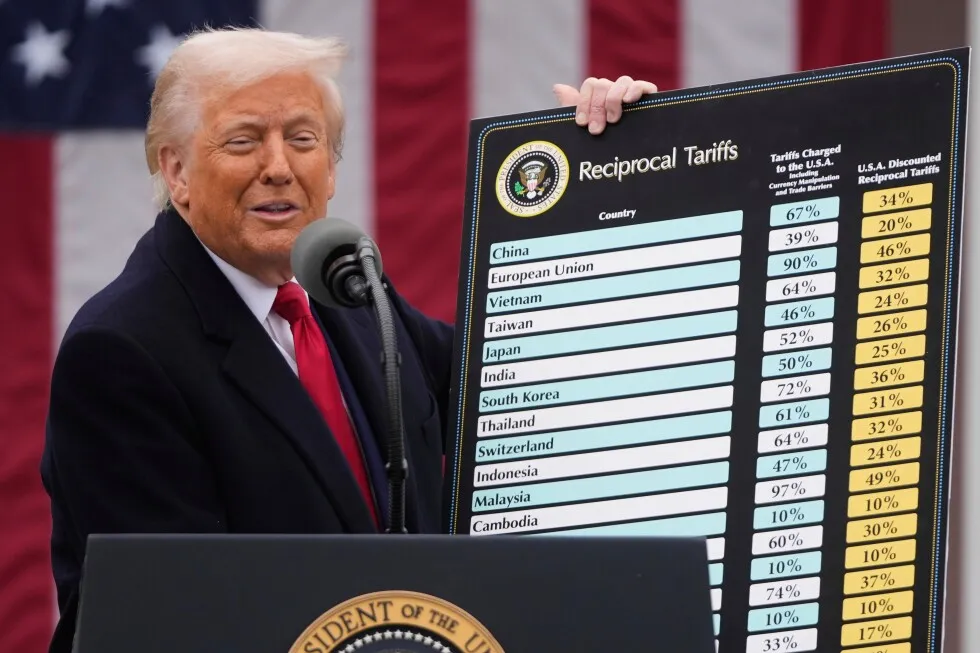
التركيز على الحقائق: يقول ترامب إن التعريفات الجمركية خلقت معجزة اقتصادية. الحقائق تحكي قصة مختلفة
WASHINGTON (AP) — Looking back on the first year of his second term, President Donald Trump boasts that he has resurrected the American economy by imposing big import taxes on foreign products. He made his case in a recent opinion piece in The Wall Street Journal, chiding the paper and critics, including mainstream economists, who predicted that tariffs would backfire, raising prices and threatening growth. “Instead,’' he wrote, “they have created an American economic miracle.”
But the proof he offers is often off-base or wrong altogether.
Here’s a look at the facts around Trump’s assessment of tariffs.
CLAIM: “Just over one year ago, we were a ‘DEAD’ country. Now, we are the ‘HOTTEST” country anywhere in the world!’ ’’
THE FACTS: This is a standard statement from Trump. But the U.S. economy was hardly “dead’’ when Trump returned to office last year. And in Trump’s second term, it’s performed strongly — after getting off to a bumpy start.
In 2024, the last year of the Biden presidency, American gross domestic product grew 2.8%, adjusted for inflation, faster than any wealthy country in the world except Spain. It also expanded at a healthy rate from 2021 through 2023.
The numbers for all of 2025 aren’t out yet. But during the first three quarters of the year, Trump’s tariffs — or the threat of them — delivered mixed results for the American economy.
From January to March, U.S. GDP actually shrank for the first time in three years. The main culprit was easy to identify: a surge in imports, which are subtracted from GDP, as American companies rushed to buy foreign products before Trump could impose tariffs on them.
But growth rebounded in the second half of the year. From April through June, the economy expanded at a healthy 3.8% pace. And from July through September, it grew even faster — 4.4%. A big part of the surge was a drop in imports, likely reflecting Trump’s tariffs as well as the fact that importers had already stocked up at the start of the year. Strong consumer spending also drove economic growth.
Trump also likes point to solid gains in the U.S. stock market. He noted that stocks hit new highs 52 times in 2025. It’s true that the American stock market did well last year. But it underperformed many foreign stock markets. The benchmark S&P 500 index climbed 17% — a nice gain but short of a 71% surge in South Korea, 29% in Hong Kong, 26% in Japan, 22% in Germany and 21% in the United Kingdom.
___ CLAIM: “Annual core inflation for the past three months has dropped to just 1.4% — far lower than almost anyone, other than me, had predicted.”
THE FACTS: The president is using cherry-picked data to vastly exaggerate where inflation stands.
His figure for annual inflation in the past three months -- which excludes the volatile food and energy prices -- is low, but reflects data distorted by the government shutdown in October and November, which disrupted the government’s data collection and forced the agency that compiles the figures to plug in rough estimates in some categories that artificially lowered overall inflation.
Annual core inflation for the final six months of 2025 is higher at 2.6%. That is down from January 2025’s level but about where it was in October 2024. Overall, inflation has leveled off this year, and was 3% in September before the government shutdown, the same as it had been in January 2025.
It’s true that inflation hasn’t been as high as many economists worried it would be when Trump started rolling out tariffs last spring, but that is partly because many of the “Liberation Day” tariffs were withdrawn, reduced or riddled with exemptions. When Democrats won some high-profile elections last year by highlighting “affordability” concerns, the administration rolled back existing or planned tariffs on coffee, beef and kitchen cabinets, for example, a backhanded acknowledgment that the duties were raising prices.
The impact of tariffs can be more clearly seen in core goods prices, which also exclude food and energy. Before the pandemic, core goods costs typically barely rose — or even fell — each year, but last December they were 1.4% higher than a year earlier. That was the largest increase, outside the pandemic, since 2011.
Alberto Cavallo, an economist at Harvard and the author of a study on the impact of tariffs cited by Trump in his op-ed, has found that Trump’s tariffs have boosted overall inflation by roughly three-quarters of a percentage point. ____
CLAIM: “The data shows that the burden, or ‘incidence,’ of the tariffs has fallen overwhelmingly on foreign producers and middlemen, including large corporations that are not from the U.S. According to a recent study by the Harvard Business School, these groups are paying at least 80% of tariff costs.”
THE FACTS: The study Trump cited appears to conclude the opposite of what Trump claimed. Authored by Cavallo and two colleagues, it finds that “U.S. consumers were bearing roughly 43% of the tariff-induced border cost after seven months, with the remainder absorbed mostly by U.S. الشركات." وقال كافالو عبر البريد الإلكتروني إن أسعار الواردات لم تنخفض كثيرا، "مما يشير إلى أن المصدرين الأجانب لم يخفضوا أسعارهم قبل التعريفة الجمركية بما يكفي لتحمل حصة كبيرة من العبء". ____ ادعاء ترامب: "لقد خفضنا عجزنا التجاري الشهري بنسبة مذهلة بلغت 77٪".
الحقائق: يتضمن هذا الادعاء المزيد من الانتقاء، وهو ما يعكس نسبة الانخفاض من العجز التجاري المرتفع للغاية في يناير/كانون الثاني 2025، عندما تولى الرئيس منصبه، إلى عجز منخفض للغاية في أكتوبر/تشرين الأول.
القصة أكثر تعقيدا مما يصورها الرئيس. العجز التجاري - الفجوة بين ما تبيعه الولايات المتحدة للدول الأخرى وما تشتريه منها - ارتفع بالفعل منذ عودته إلى البيت الأبيض.
من يناير إلى نوفمبر في عام 2025، تراكمت الولايات المتحدة عجزًا تجاريًا بقيمة 840 مليار دولار تقريبًا، بزيادة 4٪ عن نفس الفترة من عام 2024. وفي الأشهر الثلاثة الأولى من عام 2025، سارع المستوردون إلى شراء المنتجات الأجنبية - قبل أن يتمكن ترامب من فرض تعريفات جمركية على لهم. بعد ذلك، أصبح العجز التجاري الشهري أقل باستمرار مما كان عليه في عام 2024. لكن ارتفاع الواردات من يناير إلى مارس كان كبيرا للغاية لدرجة أن العجز التجاري لعام 2025 حتى تاريخه لا يزال يتجاوز العجز في عام 2024.
____
ادعاء: "لقد نجحت في استخدام أداة التعريفات الجمركية لتأمين استثمارات هائلة في أمريكا، كما لم تشهد أي دولة أخرى من قبل. ... في أقل من عام واحد، حصلنا على التزامات لأكثر من 18 تريليون دولار، وهو رقم لا يمكن للكثيرين فهمه. الحقائق: في الواقع، استخدم ترامب التهديد بالتعريفة الجمركية لانتزاع التزامات استثمارية من شركاء أمريكا التجاريين الرئيسيين، على سبيل المثال، تعهد الاتحاد الأوروبي بمبلغ 600 مليار دولار على مدى أربع سنوات. لكن ترامب لم يذكر كيف توصل إلى 18 تريليون دولار، وقد نشر البيت الأبيض رقما قدره 9.6 تريليون دولار، والذي يشمل القطاعين الخاص والعام التزامات الاستثمار من دول أخرى.
قدر الباحثون في معهد بيترسون للاقتصاد الدولي الشهر الماضي تعهدات الاستثمار بمبلغ 5 تريليون دولار من الاتحاد الأوروبي واليابان وكوريا الجنوبية وتايوان وسويسرا وليختنشتاين ودول الخليج الفارسي مثل المملكة العربية السعودية وقطر والبحرين والإمارات العربية المتحدة.
وأثاروا شكوكًا حول ما إذا كانت الأموال ستتحقق بالفعل، ويرجع ذلك جزئيًا إلى أن الاتفاقيات غامضة وأحيانًا لأن الدول ستجهد من أجل تحمل تكاليفها. ولكن كل الأرقام ضخمة. فقد بلغ إجمالي الاستثمار الخاص في الولايات المتحدة في الآونة الأخيرة وتيرة سنوية بلغت 5.4 تريليون دولار. وفي عام 2024، وهو العام الأخير الذي تتوفر عنه أرقام، بلغ إجمالي الاستثمار الأجنبي المباشر في الولايات المتحدة 151 مليار دولار، ويشمل الاستثمار المباشر الأموال المستثمرة في أشياء مثل المصانع والمكاتب، ولكن ليس الاستثمارات المالية مثل الأسهم والسندات. ___ ابحث عن التحقق من صحة AP هنا: https://apnews.com/APFactCheck.