

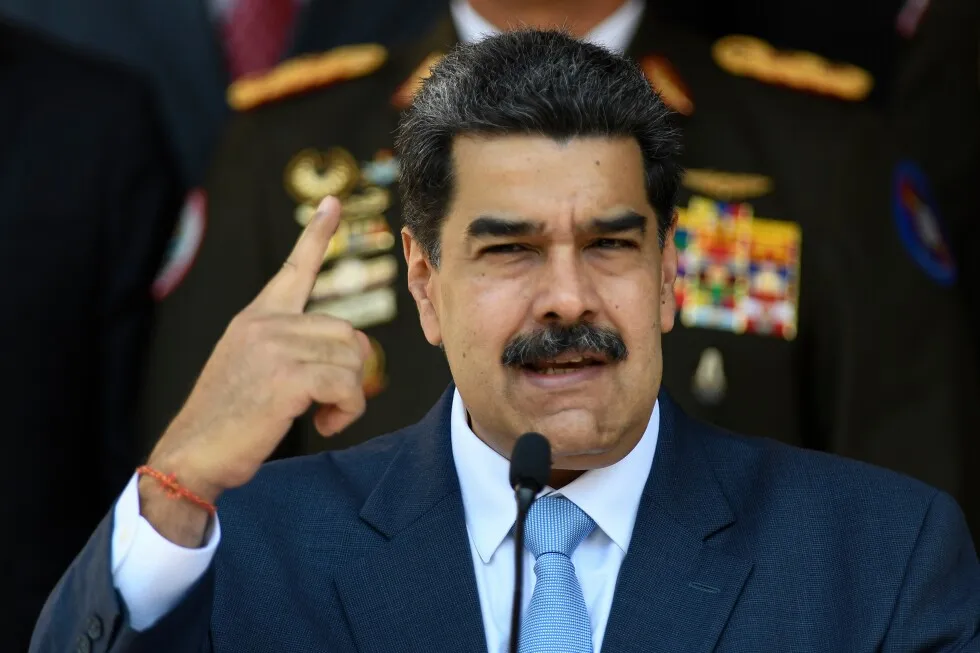
Argentine judge requests the US to extradite Maduro to be tried for crimes against humanity
BUENOS AIRES (AP) — The Argentine justice system requested the United States on Wednesday to extradite the deposed Venezuelan president Nicolás Maduro, who has been under arrest in that country since the beginning of January, to be investigated in a case for alleged crimes against humanity perpetrated during his administration.
Federal judge Sebastián Ramos, in charge of the case initiated in 2023 based on a presentation by a non-governmental organization representing the Venezuelan complainants, the measure was ordered, which must be processed by the Argentine Foreign Ministry before the government of Donald Trump.
“Please issue an international appeal to the United States of America, in order to request the extradition of Nicolás Maduro Moros, who would have been recently detained in Venezuela and transferred deprived of liberty to the United States of America, in accordance with the Treaty of Extradition signed between the Argentine Republic and the latter country,” says Ramos' resolution to which The Associated Press had access.
The justice system of the South American country has precedents in this field, having opened investigations against rulers and politicians from other countries for alleged crimes against humanity under the principle of universal justice, which allows action against these crimes even if they have been committed outside its borders.
In international criminal law, Argentina is considered a model nation for the historic trial and conviction of the leaders of the last military dictatorship (1976-1983), during which human rights were systematically violated.
However, the majority of cases involving leaders from other countries have not culminated in arrests or extraditions.
The case dates back to 2023, when the Argentine justice system began proceedings against Maduro and several members of the Venezuelan government—including Justo José Noguera Pietri, a former commander of the Bolivarian National Guard and former leader of Maduro's government, and Interior Minister Diosdado Cabello—for the detention. illegal arrest and application of torture to several dissidents and protesters opposed to the leftist government during the massive protests in Venezuela.
The cause was promoted by the Argentine Forum in Defense of Democracy (FADER), a non-governmental organization dedicated to the defense of human rights in the region.
According to the complainants, a systematic plan of repression, forced disappearance of people, torture, homicides and persecution against dissidents has been in force in Venezuela since 2014.
In this framework, a federal court in Argentina ordered in September 2024 the international capture of Maduro and the other defendants.
After learning of Maduro's arrest during a United States military operation in Venezuela last January 3, Argentine federal prosecutor Carlos Stornelli asked Judge Ramos to request the extradition of the socialist leader to Argentina so that he can be investigated for crimes against humanity for which he is accused in the country, a request that the magistrate decided to follow through on.
Ramos' resolution comes after Argentine President Javier Milei praised the US intervention in Venezuela, thereby intensifying his alignment with the Trump administration.
In 2022, the Argentine federal justice system began a criminal investigation into the President of Nicaragua, Daniel Ortega, and Vice President Rosario María Murillo to determine whether they are responsible for crimes against humanity.
Meanwhile, in 2010 a case was opened for crimes reported in a period that covers the Spanish civil war (1936-1939), the regime of Francisco Franco and the two years that elapsed between the dictator's death in 1975 and the holding of the first democratic elections.
The prosecutors and judges behind these cases considered that they are empowered to investigate human rights violations that occurred in another country. alleging that the national Constitution recognizes the principle of universal jurisdiction.
___
The correspondent in Buenos Aires, Débora Rey, contributed to this report.