

Basic services resume in Syrian camp housing families of the Islamic State group
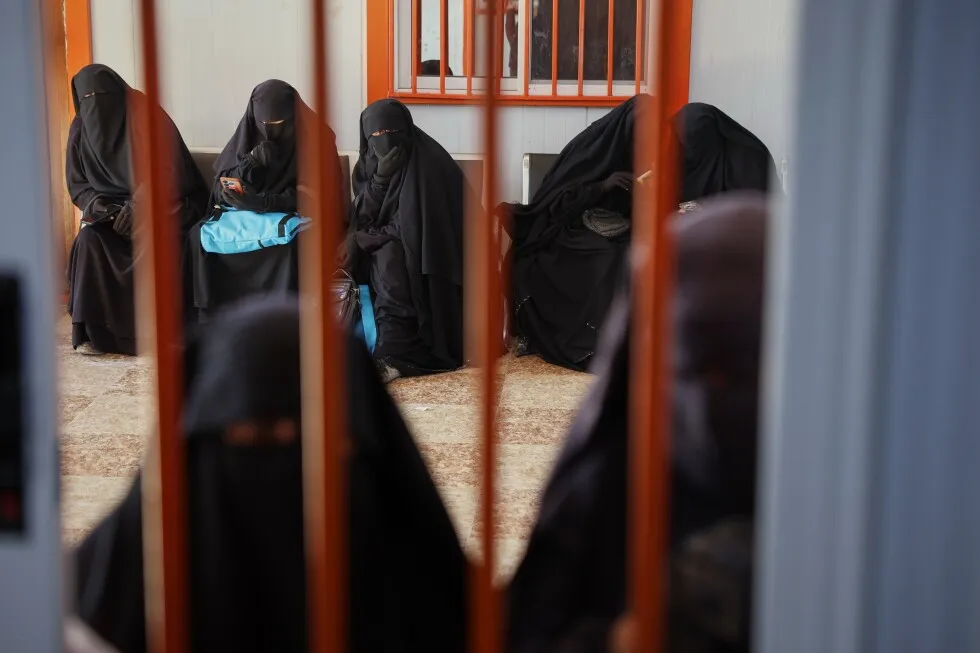
AL-HOL, Syria (AP) — Basic services at a camp in northeastern Syria housing thousands of women and children linked to the Islamic State (IS) group are slowly returning to normal after government forces seized the facility from Kurdish fighters, a United Nations official said Thursday.
Syria's central government forces captured the al-Hol camp on Jan. 21 during a weeks-long offensive against the Kurdish-led and US-backed Syrian Democratic Forces (SDF), which had run the camp near the border with Iraq for a decade. A ceasefire agreement has since ended the fighting.
Celine Schmitt, spokesperson for the U.N. refugee agency (UNHCR), told The Associated Press that the disruption to services lasted two days during fighting around the camp.
Schmitt stated that a UNHCR team visited the recaptured camp to establish “very quickly the delivery of basic services, humanitarian services,” including access to health centers. He noted that as of January 23, they were able to deliver bread and water inside the camp.
Speaking in Damascus, Schmitt said the situation in the al-Hol camp has been calm and that some humanitarian groups have also distributed food packages. He noted that the government has appointed a new administrator for the camp.
Camp residents transferred to Iraq
At its peak, after the defeat of IS in Syria in 2019, around 73,000 people lived in al-Hol. The number has since decreased as some countries repatriated their citizens. The camp's residents are primarily children and women, including many wives or widows of IS members.
Technically, the camp's residents are not prisoners and most have not been charged with any crime, but they have been held in de facto detention at the facility, which is heavily guarded.
The current population is approximately 24,000 people, including 14,500 Syrians and nearly 3,000 Iraqis. Around 6,500 people of other nationalities are held in a heavily guarded section of the camp, many of whom are IS sympathizers who came from around the world to join the extremist group.
Last month, the United States began transferring to Iraq some of the 9,000 IS members detained in prisons in northeastern Syria. Baghdad said it will prosecute transferred detainees. But so far, no solution has been announced for the al-Hol camp and Roj camp, which face similar conditions.
Amal al-Hussein, of the humanitarian group Syrian Alyamama Foundation, told the AP that all clinics in the camp's medical facility work 24 hours a day, adding that up to 150 children and 100 women receive treatment daily.
She added that, in the last ten days, there have been five natural births in the camp, while cesarean section cases were referred to hospitals in the eastern province of Deir el-Zour or the city of al-Hol.
She stated that, in the camp, there is a shortage of baby formula, as well as diapers for children and adults.
Safiya Suleiman, originally from the eastern Syrian city of Mayadeen and who has lived for eight years in the camp with her six children, said that some food is in short supply, and the worst thing is that her children did not receive a proper education.
“We want clothes for the children, as well as canned food, vegetables and fruits,” she said in her tent, surrounded by three of his little daughters. “We haven't had anything for a month yet,” he said, referring to vegetables and fruits, which are too expensive for most camp residents.
“Enormous material challenges”
Mariam al-Issa, from the city of Safira, in northern Syria, said she wants to leave the camp together with her children so that they can have a proper education and eat good food.
“Due to the financial conditions we cannot live well,” she said. “The food basket includes lentils, but the children don't like to eat them anymore.”
“The children crave everything,” al-Issa said, adding that the food in the camp should be better than mainly bread and water. “It's been a month since we've had a decent meal,” he said.
Thousands of Syrians and Iraqis have returned home in recent years, but many only return to find homes destroyed and discover there are no jobs, as most Syrians continue to live in poverty as a result of the conflict that began in March 2011.
Schmitt said investment is needed to help people returning home feel safe. “They need to receive support to have a house, to be able to rebuild a home and have an income,” he said.
“Investments to respond to and overcome the enormous material challenges people face when they return home,” he added.
_____
Shaheen reported from Damascus.
___
This story was translated from English by an AP editor with the help of a generative artificial intelligence tool.