

“Please get vaccinated,” asks a senior US health official in the face of the rise in measles cases
WASHINGTON (AP) — A top U.S. health official urged people Sunday to get vaccinated against measles at a time with active outbreaks in several states and as the United States risks losing its measles elimination status.
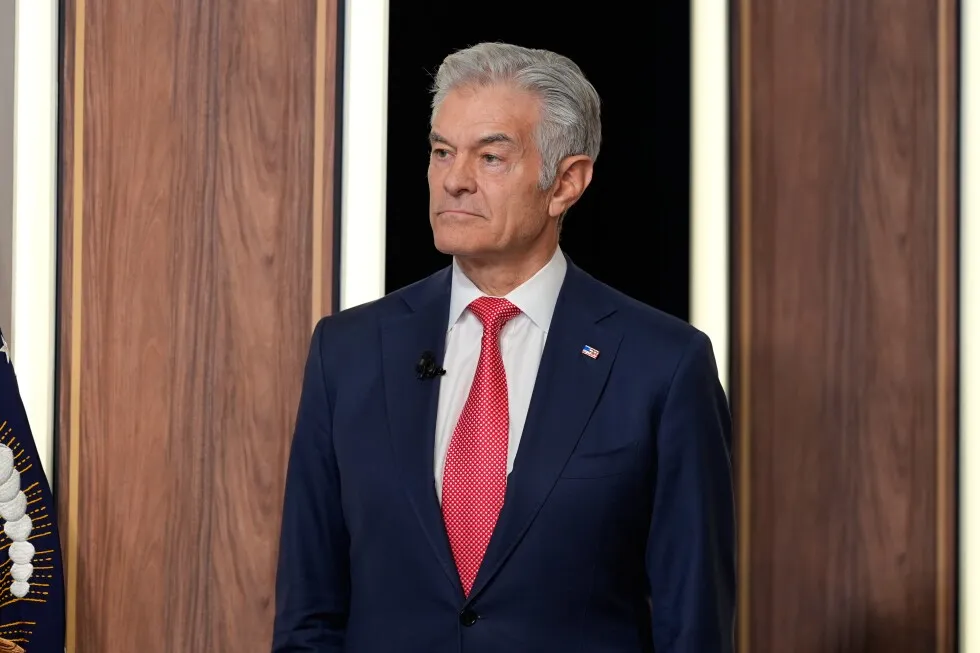
“Please get vaccinated,” said Dr. Mehmet Oz, administrator of the Centers for Medicare and Medicaid Services, whose chief has stoked suspicions about the safety and importance of the vaccines. “We have a solution to our problem.”
Oz, a heart surgeon, defended some recently revised federal vaccine recommendations, as well as past comments by President Donald Trump and the nation's health chief, Robert F. Kennedy Jr., about the vaccines' effectiveness. Oz delivered a clear message about measles.
“Not all diseases are equally dangerous and not all people are equally susceptible to those diseases,” he said on CNN’s “State of the Union.” “But measles is one you should get vaccinated for.”
An outbreak in South Carolina affecting hundreds of people has surpassed the number of cases recorded in the 2025 Texas outbreak, and there is also one on the Utah-Arizona border. Other states have had confirmed cases this year. The outbreaks have mainly affected children and have emerged as infectious disease experts warn that growing public distrust of vaccines in general may be contributing to the spread of a disease that was once declared eradicated by public health officials.
When asked in the television interview if people should fear measles, Oz responded: “Oh, of course.” He said Medicare and Medicaid will continue to cover the measles vaccine as part of insurance programs.
“There will never be a barrier for Americans to access the measles vaccine. And it is part of the basic schedule,” Oz said.
But Oz also stated that "we've advocated for measles vaccines from the beginning" and that Kennedy "has been on the front lines of this."
Questions about the vaccines did not come up later in an interview with Kennedy on Fox News Channel's "The Sunday Briefing," where he was asked what kind of Super Bowl snack he might have (probably yogurt). He also said he eats steak and sauerkraut in the morning.
Kennedy's critics have argued that the health secretary's long-standing skepticism about US vaccine recommendations and his past support for unfounded claims that vaccines can cause autism can influence official public health guidance against medical consensus.
Oz argued that Kennedy's stance was to support the measles vaccine despite Kennedy's general comments about the vaccine schedule. recommended.
“When the first outbreak happened in Texas, he said, get the measles vaccine, because that's an example of a disease you should get vaccinated against,” Oz said.
The Republican administration last month eliminated some vaccine recommendations for children, a revision to the traditional vaccine schedule that the Department of Health and Human Services said was in response to a request from Trump.
Trump asked the agency to review how peer nations approach vaccine recommendations and consider revising U.S. guidance accordingly.
States, not the federal government, have the authority to require vaccines for schoolchildren. While federal requirements often influence those state regulations, some states have begun creating their own alliances to counter the White House's guidance on vaccines.
Vaccination rates in the United States have declined and the share of children with exemptions has reached an all-time high, according to federal data. At the same time, rates of diseases that people can protect themselves from with vaccines, such as measles and whooping cough, are rising across the country.
Kennedy's past anti-vaccine activism
Kennedy's past skepticism about vaccines has come under scrutiny since Trump first nominated him to lead the Department of Health and Human Services.
During his Senate confirmation testimony last year, Kennedy told lawmakers that a 2019 trip he took to Samoa, which was closely scrutinized and occurred before a devastating measles outbreak, “had nothing to do with it.” to do with vaccines.”
But documents obtained by The Guardian and The Associated Press undermine that testimony. Emails sent by U.S. embassy and United Nations staff said Kennedy sought to meet with senior Samoan officials during his trip to the Pacific island nation.
Samoan officials later said Kennedy's trip bolstered the credibility of anti-vaccine activists before the measles outbreak, which sickened thousands of people and killed 83, mostly children under five.
Mixed messages about autism and vaccines
Oz's comments mark a broader pattern among government officials of expressing discordant and sometimes contradictory statements about the effectiveness of vaccines amid a review of US public health policy.
Officials have walked a fine line in criticizing US vaccine policy in the past, often appearing to express sympathy for activists' baseless conspiracy theories. anti-vaccines, while also not straying too far from established science.
During a Senate hearing on Tuesday, Jay Bhattacharya, director of the National Institutes of Health, said that no single vaccine causes autism, but he did not rule out the possibility that research could find that some combination of vaccines could have negative health side effects.
But Kennedy, in his Senate testimony, has argued that a link between vaccines and the virus has not been disproven. autism.
He has previously claimed that some components of vaccines, such as a mercury-containing preservative, thimerosal, can cause childhood neurological disorders such as autism. Most measles, mumps, and rubella vaccines do not contain thimerosal. A federal vaccine advisory committee reviewed by Kennedy last year voted to stop recommending vaccines containing thimerosal.
Government public health officials often cite the need to restore confidence in public health systems after the coronavirus pandemic, when vaccine policy and the overall public health response to the deadly pandemic became a highly polarized issue in American politics.
Disinformation and conspiracy theories about the public health system also spread during the pandemic, and old anti-vaccine activist groups saw a surge of interest from the general public.
Kennedy, who for years led the anti-vaccine activist group Children's Health Defense, has been criticized for ordering reviews of vaccines and public health guidelines that major medical research groups have considered established science.
Public health experts also criticized the president for making unsubstantiated claims about highly politicized health issues. During an Oval Office event in September, Trump claimed without evidence that Tylenol and vaccines are linked to an increase in the incidence of autism in the United States.
___
This story was translated from English by an AP editor with the help of a generative artificial intelligence tool.