

Snow Drought, Political Shifts and Strikes Batter Ski Industry in Western U.S.
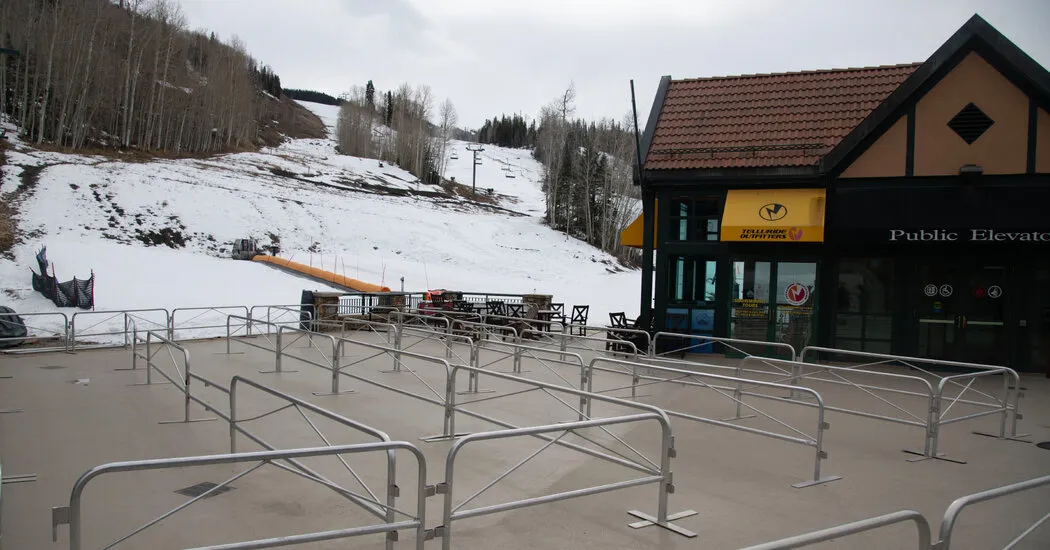
Bare slopes. Closed terrain. Canceled vacations.
In the Western United States, the 2026 ski season is shaping up to be one of the worst in decades.
A snow drought of historic proportions is hobbling many ski areas, leading skiers to stay home, mountain towns to face economic uncertainty, and sparking fears of water shortages and wildfires come summer.
In Colorado, the statewide snowpack is at 57 percent of average, a record low. Utah’s snowpack is at 62 percent, nearly the worst since observations began in 1980.
“It seems like a joke, but technically, the Florida Panhandle has seen more snowfall than Salt Lake City this year,” said Jon Meyer, assistant state climatologist at the Utah Climate Center.
The problems began early. In Utah, where license plates boast of “the greatest snow on Earth,” November and December featured the warmest average temperatures in roughly 130 years of record keeping. “The lack of winter storm activity and the warm air has combined to really limit accumulating snow days,” said Mr. Meyer. The weather, he added, is “aligned with what we’ve been predicting to occur as a result of climate change.”
The high temperatures meant that what precipitation did fall was more often rain than snow in many areas and by Thanksgiving, the traditional opening date for major resorts, only 11 percent of terrain at Western ski areas was open.
Thank you for your patience while we verify access. If you are in Reader mode please exit and log into your Times account, or subscribe for all of The Times.
Thank you for your patience while we verify access.
Already a subscriber? Log in.
Want all of The Times? Subscribe.