

Trump's border czar to remove 700 immigration agents from Minnesota; there will still be 2,000 left
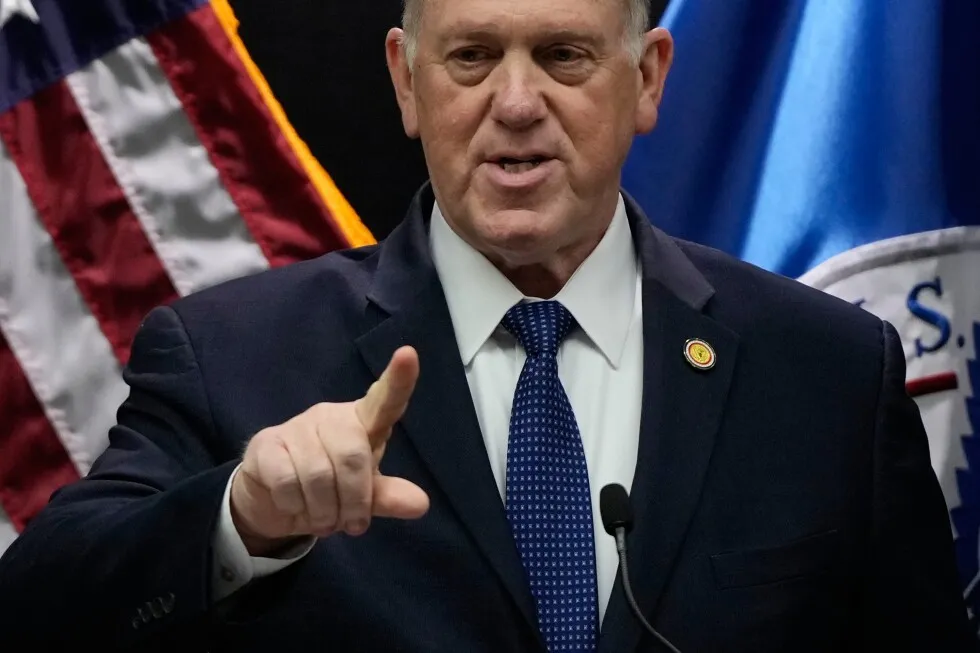
MINNEAPOLIS, Minnesota, USA (AP) — The United States government will reduce the number of immigration agents in Minnesota, but will continue with the raids that have caused weeks of tensions and deadly clashes, the so-called “border czar,” Tom Homan, announced Wednesday.
Approximately 700 of the nearly 3,000 federal agents deployed in Minnesota will be withdrawn immediately, after state and local authorities agreed last week cooperate by handing over arrested immigrants, Homan said.
However, he did not provide a date for when the operation that has become a flashpoint in the debate over President Donald Trump's mass deportation program could end since immigration agents shot and killed U.S. citizens Renee Good and Alex Pretti in Minneapolis.
Approximately 2,000 officers will remain in the state after this week's withdrawal, Homan said. That's about the same amount sent to Minnesota in early January when the operation was expanded, kicking off what the Department of Homeland Security called its “largest immigration operation ever.”
Since then, masked and heavily armed elements have faced resistance from residents who are upset with their aggressive tactics.
Homan indicated that there will be a further withdrawal of federal elements after there is more cooperation and protesters stop interfering with officers making arrests.
Trump told NBC News that he ordered the drawdown, adding that one lesson emerging from the tumult in Minnesota is that "maybe we can use a little bit of a softer approach. But you still have to be firm."
Gov. Tim Walz and Minneapolis Mayor Jacob Frey, both Democrats who have strongly criticized the police crackdown, declared that removing 700 officers was a good first step, but that the entire operation should end quickly.
“We need a faster and larger reduction of forces, state investigations into the murders of Alex Pretti and Renee Good and an end to this campaign of retaliation,” Walz posted on social media.
Vice President JD Vance indicated that the agents who would leave the state were mainly in Minneapolis to protect those making arrests. “We are not reducing the immigration operation,” Vance insisted in an interview on “The Megyn Kelly Show.”
Trump administration pushed for Minnesota cooperation
Homan took over the operation in Minnesota in late January after the second fatal shooting by federal agents and amid growing political backlash and questions about how the operation was being carried out.
Homan immediately said that federal officials could reduce the number of agents in Minnesota, but only if more state and local authorities cooperated. He pushed for jails to alert ICE about inmates who could be deported, saying handing over such inmates to the agency is safer because fewer agents have to go out looking for people who are in the country illegally.
Homan noted during a news conference Wednesday that there has been an “unprecedented increase” in local police cooperation, resulting in less need for federal agents and a safer environment, allowing the 700 agents to withdraw.
He did not specify which jurisdictions have been cooperating with the Department of Homeland Security. White House press secretary Karoline Leavitt said in a statement that the federal administration will monitor local officials to make sure they follow through on their commitments.
The Trump administration has long complained about so-called sanctuary cities, a term generally applied to local governments that limit their cooperation with federal authorities in arresting immigrants.
Minnesota officials say their state prisons and nearly all county police headquarters already cooperate with authorities. immigration.
But the two county jails that serve Minneapolis and St. Paul and that receive the most inmates had not previously complied with ICE's idea of full cooperation, although both turn inmates over to federal authorities if a judge issues an arrest warrant.
Hennepin County police, which serve Minneapolis and several suburbs, said their policies have not changed. The one in Ramsey County in neighboring St. Paul did not respond to a request for comment.
The ICE operation in Minnesota has been a success, according to Homan
Homan said that the ICE operation in Minnesota has been a success, listing people wanted for violent crimes who were taken off the streets.
“I think it is very effective in terms of public safety,” he said Wednesday. "Was it a perfect operation? No."
He also made clear that withdrawing a group of federal agents from Minnesota is not a sign that the government is backing down. "We're not giving up the president's mission in a mass deportation operation," Homan said.
"They're not going to stop ICE. They're not going to stop the Border Patrol," Homan said of the ongoing protests. “All they are doing is irritating their community.”
Schools ask court to block immigration operations
Two Minnesota school districts and a teachers union filed a lawsuit Wednesday to block federal authorities from conducting immigration operations in or around schools, as such actions have disrupted classes, endangered students and caused a decline in attendance.
The lawsuit also argues that Operation Metro Surge has marked a policy change that removed limits on law enforcement in “sensitive locations,” including schools.
Homeland Security spokeswoman Tricia McLaughlin alleged that “ICE is not going into schools to arrest children, we are protecting children.”
___
Correspondents Corey Williams in Detroit contributed to this story; John Seewer in Toledo, Ohio and Moriah Balingit in Washington.